
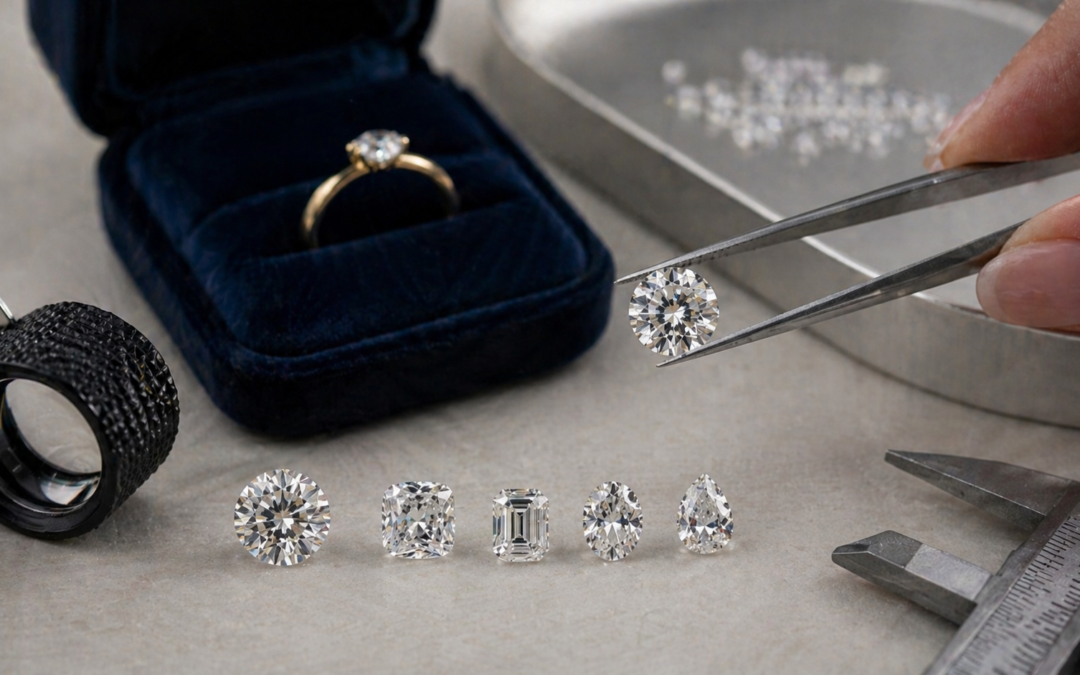
Buying a diamond is more than just a purchase, it’s both an emotional milestone and a significant financial investment. Whether you’re shopping for an engagement ring, a special gift, or a personal keepsake, choosing the right diamond can feel overwhelming.
Many buyers struggle with questions like: What makes one diamond better than another? Why do prices vary so much? Am I getting good value? With so much information and misinformation available, it’s easy to feel confused or unsure about your decision.
At its core, choosing a diamond comes down to balancing the 4Cs—cut, clarity, color, and carat based on your priorities and budget. Start by prioritizing cut for maximum brilliance, then decide how important size (carat) is to you. From there, select color and clarity grades that appear beautiful to the naked eye without overpaying for differences you won’t notice. Finally, always choose a certified diamond and work with a trusted jeweler to ensure quality and value.
This is where understanding the 4Cs—cut, clarity, color, and carat become essential. These four factors determine a diamond’s beauty, quality, and price. Knowing how they work together empowers you to make a confident, informed purchase rather than relying solely on sales pitches.
This guide will walk you through everything you need to know about the 4Cs, how they interact, and how to choose the perfect diamond based on your preferences and budget.
What Are the 4Cs of Diamonds? (Quick Overview)
The 4Cs—cut, clarity, color, and carat are the universal standards used to evaluate diamonds.
- Cut: How well a diamond is shaped and faceted to reflect light
- Clarity: The presence (or absence) of internal and external imperfections
- Color: How colorless (or tinted) a diamond appears
- Carat: The diamond’s weight, often associated with size
These factors don’t work independently; they interact to influence a diamond’s overall appearance and value. For example, a larger diamond (carat) with poor cut may look dull, while a smaller diamond with excellent cut can appear more brilliant and eye-catching.
Among the 4Cs, cut is typically the most important, as it directly affects sparkle and visual beauty.
Diamond Cut—The Most Important Factor
When people hear “cut,” they often think of shape (round, oval, etc.), but cut actually refers to how well a diamond is crafted and proportioned.
Why Cut Matters
Cut determines how light interacts with the diamond, impacting:
- Brilliance (white light reflection)
- Fire (colored light dispersion)
- Sparkle (light movement and scintillation)
A well-cut diamond reflects light beautifully, while a poorly cut one can appear dull, even if it has excellent clarity or color.
Cut Grades
Diamonds are graded from:
- Excellent
- Very Good
- Good
- Fair
- Poor
Visual Differences
- Excellent cut: Maximum sparkle, ideal proportions
- Good/Fair cut: Noticeably less brilliance
- Poor cut: Light leaks out, resulting in a lifeless appearance
Recommended Cut Grades
- Best value: Very Good or Excellent
- Premium: Excellent
Why You Shouldn’t Compromise on Cut
Cut is the one area where cutting corners (literally) can significantly reduce a diamond’s beauty. Even with a limited budget, prioritizing cut ensures your diamond looks stunning.
Diamond Clarity—Understanding Imperfections
Even though inclusions are common, many are microscopic and do not impact the diamond’s beauty to the naked eye. Understanding where inclusions are located can also help you choose a diamond that looks cleaner without paying for higher clarity grades.
Clarity refers to natural imperfections, known as:
- Inclusions: Internal flaws
- Blemishes: Surface imperfections
Most diamonds have some level of imperfection; this is completely normal.
Clarity Scale (Simplified)
- FL (Flawless): No imperfections (extremely rare)
- IF (Internally Flawless)
- VVS1–VVS2: Very, very slight inclusions
- VS1–VS2: Very slight inclusions
- SI1–SI2: Slightly included
- I1–I3: Visible inclusions
What Is “Eye-Clean”?
An eye-clean diamond appears flawless to the naked eye, even if minor inclusions exist under magnification. This is where smart buyers find value.
Best Clarity for Value
- VS2–SI1 range offers an excellent balance between quality and price
When Clarity Matters More
- Larger diamonds (inclusions are easier to see)
- Step-cut shapes like emerald or Asscher
Diamond Color—How White is White?
Diamonds are graded on a color scale from D (colorless) to Z (light yellow/brown).
Color Categories
- D–F: Colorless
- G–J: Near-colorless
- K–Z: Noticeable color
What You Can Actually See
Most people cannot distinguish between D and G diamonds without specialized tools. Subtle differences become more noticeable in larger stones or certain settings.
Best Color Grades for Value
- G–H offers a near-colorless look at a better price
When to Choose a Higher Color
- White gold or platinum settings
- Larger diamonds
- Personal preference for icy white appearance
Fancy Colored Diamonds
Some diamonds are intentionally colored (pink, blue, yellow). These are graded differently and can be highly valuable.
Diamond Carat—Size vs. Value
It’s important to remember that visual size can be enhanced by smart design choices, such as halo settings or thinner bands. Focusing solely on carat weight without considering cut and proportions can lead to a diamond that appears smaller than expected.
Carat measures weight, not necessarily visible size.
- 1 carat = 200 milligrams
Size vs. Appearance
Two diamonds with the same carat weight can look different due to:
- Cut proportions
- Shape
- Depth and spread
Price Jumps
Prices increase sharply at milestone weights:
- 0.5 carat
- 1.0 carat
- 1.5 carat
- 2.0 carat
Smart Tips
- Choose slightly under milestone weights (e.g., 0.90 instead of 1.0)
- Opt for shapes that appear larger (oval, pear)
- Prioritize cut to maximize perceived size
How the 4Cs Work Together
No single “C” should be considered in isolation, as each one influences the overall appearance and value of the diamond. A well-balanced combination often results in a more beautiful diamond than maximizing just one factor.
Choosing a diamond is about balance, not perfection.
Common Trade-Offs
- Bigger diamond vs. higher quality
- Better cut vs. higher clarity
- Color vs. budget
Example Scenarios
- Budget-focused buyer: Prioritize cut, compromise slightly on color and clarity
- Premium buyer: Aim for excellent cut with high grades across all Cs
- Size-focused buyer: Choose larger carat with slightly lower clarity/color
Prioritization Strategy
- Cut
- Carat (based on preference)
- Color
- Clarity
Diamond Shapes and Their Impact on the 4Cs
Each shape has unique characteristics that can enhance or minimize certain diamond qualities, making shape selection an important part of the buying process. Choosing the right shape can help you optimize your budget while achieving your desired look.
Popular Shapes
- Round
- Oval
- Cushion
- Princess
- Emerald
Key Insights
- Appear larger: Oval, pear, marquise
- Hide inclusions: Cushion, oval
- Show color more: Emerald, Asscher
- Pricing: Round diamonds are typically more expensive
Natural vs. Lab-Grown Diamonds
Both options offer the same physical and chemical properties, making them visually indistinguishable without specialized equipment. Your decision often comes down to personal values, budget considerations, and long-term preferences.
Key Differences
- Natural: Formed over billions of years
- Lab-grown: Created in controlled environments
Price Comparison
Lab-grown diamonds are generally 20–40% less expensive.
Pros & Cons
Natural Diamonds
- Rarity and long-term value
- Traditional appeal
Lab-Grown Diamonds
- More affordable
- Environmentally conscious
Which Should You Choose?
- Budget-conscious buyers: Lab-grown
- Traditional or investment buyers: Natural
Diamond Certification—Why It Matters
A grading report provides an unbiased assessment of the diamond, giving you confidence in what you’re purchasing. It also makes it easier to compare diamonds objectively when shopping across different retailers.
Trusted Labs (H3)
- GIA (Gemological Institute of America)
- AGS
Why Certification Is Important
- Confirms quality and authenticity
- Ensures accurate grading
- Protects your investment
Risks of Uncertified Diamonds
- Overpaying
- Misrepresentation of quality
Common Diamond Buying Mistakes to Avoid
- Prioritizing carat over cut
- Overpaying for unnecessary clarity or color
- Ignoring certification
- Buying without seeing the diamond
- Not consulting an expert
How to Choose the Right Diamond for Your Budget
Setting a clear budget before shopping helps narrow down your options and prevents overspending. Working with a knowledgeable jeweler can also uncover options that maximize beauty without exceeding your financial limits.
Entry-Level Budget
- Focus on excellent cut
- SI1 clarity, G–H color
Mid-Range Budget
- Very Good to Excellent cut
- VS clarity, G–H color
Premium Budget
- Excellent cut
- VS or higher clarity
- D–F color
Strategy
Allocate most of your budget toward cut and carat, then optimize clarity and color for value.
Where to Buy Diamonds (Online vs. In-Store)
Many buyers choose a hybrid approach, researching online and purchasing in-store, to combine convenience with confidence. This allows you to compare options broadly while still benefiting from expert, in-person evaluation.
Online
- Lower prices
- Wide selection
In-Store
- See and compare diamonds in person
- Expert guidance
- Personalized service
What to Look For
- Certifications
- Transparent pricing
- Strong reputation
Why Work with a Professional Jeweler
An experienced jeweler can simplify complex information and guide you toward the best choice based on your needs. Their expertise ensures you avoid costly mistakes and feel confident in your final purchase decision.
A trusted jeweler offers:
- Personalized guidance
- Custom design services
- Ongoing care (cleaning, resizing, repairs)
- Long-term relationship and trust
Finding Your Perfect Diamond
A great diamond isn’t about perfection, it’s about balance. By understanding how cut, clarity, color, and carat work together, you can confidently choose a diamond that fits your style, expectations, and budget.
With the right knowledge and the right guidance, you can avoid common pitfalls and make a purchase you’ll cherish for a lifetime.
Take the Next Step Toward Your Perfect Diamond
Now that you understand how the 4Cs work together, you’re ready to choose a diamond with confidence and clarity. Whether you’re just starting your search or narrowing down your options, our experts are here to guide you every step of the way.
Schedule a personalized consultation to explore hand-selected diamonds, get honest recommendations, and find a piece that truly reflects your style and budget. You can also visit the A. H. Fisher Diamonds showroom to see the brilliance of each diamond in person and experience the difference that expert guidance makes.
Frequently Asked Questions (FAQs)
What is the most important of the 4Cs?
Cut is the most important because it determines sparkle.
What clarity is best for engagement rings?
VS2–SI1 offers excellent value and appearance.
Is a higher carat always better?
Not necessarily; balance with cut and quality.
Are lab-grown diamonds worth it?
Yes, especially for budget-conscious buyers.
How much should I spend on a diamond?
There’s no fixed rule; choose what aligns with your financial comfort and priorities.